Introduction: The Imperative of Safety Integrity in Industrial Processes
In the industrial landscape, particularly in sectors dealing with hazardous materials such as oil and gas, chemical processing, and power generation, the reliability of safety systems is non-negotiable. Safety Instrumented Systems (SIS) are the last line of defense against catastrophic failures. At the heart of every SIS lies the final element—the valve—which must execute its safety function flawlessly upon demand. Selecting the correct valve for these critical applications, often governed by Safety Integrity Level (SIL) requirements, demands a precise, engineering-driven approach that goes far beyond standard process control considerations.
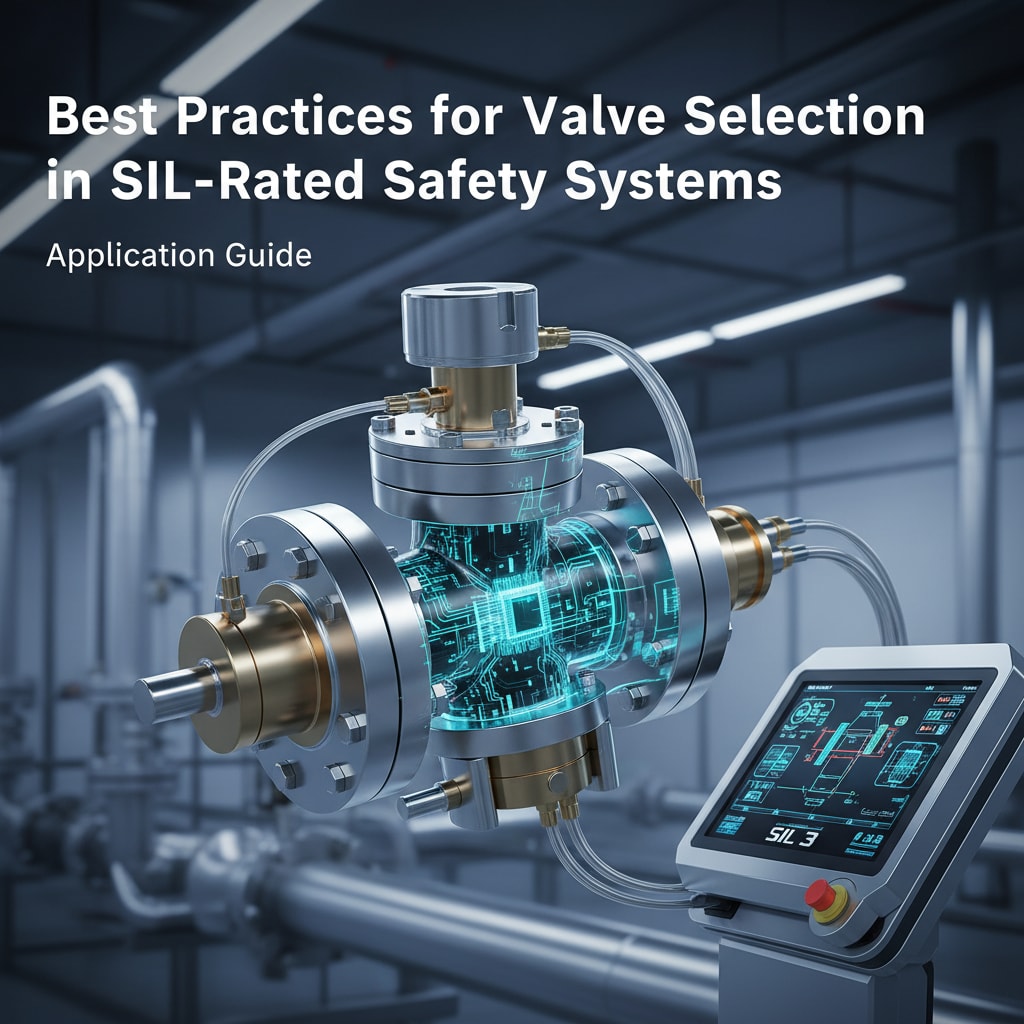
This guide explores the essential criteria and best practices for selecting valves intended for Emergency Shutdown (ESD) systems and other critical safety loops, focusing heavily on SIL compliance and reliable shutoff capabilities.
Understanding Safety Integrity Levels (SIL) and IEC 61508/61511
What is SIL and Why Does it Matter for Valves?
Safety Integrity Level (SIL) is a measure of the probability of a Safety Instrumented Function (SIF) successfully performing its designated safety task under all stated conditions. Defined by the international standards IEC 61508 (Functional Safety of E/E/PE Safety-Related Systems) and IEC 61511 (Functional Safety – Safety Instrumented Systems for the Process Industry Sector), SIL ranges from 1 (lowest integrity) to 4 (highest integrity).
For a valve to be used in a SIL-rated loop, it must possess documented evidence (often a Failure Modes, Effects, and Diagnostic Analysis – FMEDA) showing its probability of failure on demand (PFDavg) meets the required target. The valve assembly (including the actuator, solenoid, and positioner) is considered a single subsystem, and its PFDavg contribution must be calculated meticulously.
Key SIL Metrics for Valve Selection
- PFDavg (Probability of Failure on Demand Average): The primary metric defining the SIL level. Lower PFDavg means higher integrity.
- Safe Failure Fraction (SFF): The ratio of safe failures (detected or undetected) to the total failure rate. Higher SFF allows for the use of components in higher SIL applications.
- Hardware Fault Tolerance (HFT): The ability of a component to perform its required function in the presence of one or more faults (e.g., 1oo2, 2oo3 voting structures).
- Diagnostic Coverage (DC): The measure of the effectiveness of internal diagnostics to detect dangerous failures.
Criterion 1: Defining the Safety Function and Shutoff Requirements
The first step is clearly defining the required safety function. Is the valve required to isolate flow (close) or vent pressure (open)? This dictates the fail-safe action (Fail-Close or Fail-Open).
Tight Shutoff and Leakage Class
In critical ESD applications, zero leakage is often mandatory to prevent the release of hazardous media or to ensure complete isolation of a vessel. This requires specifying a stringent leakage class, typically ANSI/FCI 70-2 Class VI (Bubble-Tight Shutoff).
- Ball and Plug Valves: Excellent candidates for Class VI due to their quarter-turn design and soft seats, offering superior sealing.
- Gate Valves: While commonly used for isolation, achieving consistent Class VI sealing can be challenging, especially after long periods of inactivity.
- Globe Valves: Generally used for throttling, but specialized globe valves can achieve tight shutoff for specific applications.
The selection must also consider the process fluid's characteristics (temperature, pressure, viscosity, corrosiveness) which affect seat material compatibility and longevity.
Criterion 2: Reliability and Proven-in-Use Data
A valve used in an SIS must demonstrate high reliability, often proven through field experience and rigorous testing.
The Importance of Certified Data
Manufacturers must provide verifiable data supporting the valve's failure rates. This data usually comes from:
- FMEDA Reports: Detailed analysis performed by third-party certification bodies (e.g., Exida, TÜV) that breaks down failure modes and calculates PFDavg and SFF.
- Proven-in-Use (PIU) Data: Historical data showing the valve’s performance in similar operating environments. IEC 61511 allows the use of PIU data, provided it is collected and documented systematically, especially for non-certified components used in lower SIL applications (SIL 1 or 2).
Actuation and Accessories
The reliability of the entire assembly is paramount. The actuator (pneumatic, hydraulic, or electric) must be sized correctly to overcome maximum differential pressure and friction, ensuring rapid operation when required. Accessories like solenoids and limit switches must also be SIL-certified and tested.
For high SIL applications (SIL 3 and above), redundancy and diagnostics become crucial:
- Partial Stroke Testing (PST): A diagnostic test where the valve is moved slightly (e.g., 10% movement) while the process is running. PST significantly increases the Diagnostic Coverage (DC) and reduces the PFDavg, allowing the use of simpler components in higher SIL loops.
- Redundant Configurations (e.g., 1oo2, 2oo3): Using multiple valves or components in parallel or series to achieve HFT and reduce the likelihood of a single point of failure causing a dangerous failure.
Criterion 3: Response Time and Environmental Factors
Speed of Operation
The Safety Requirements Specification (SRS) defines the maximum allowable time for the valve to complete its safety function (e.g., 2 seconds). The valve assembly must be designed and tested to meet or exceed this requirement, often necessitating high-flow solenoids and quick-exhaust systems for pneumatic actuators.
Environmental and Operational Stress
Valves in critical safety service often sit dormant for long periods (low demand mode), only to be called upon during an emergency. This dormancy can lead to issues like stem sticking, seat binding, or corrosion.
- Material Selection: Choosing materials resistant to corrosion and stress cracking is vital.
- Coating and Lubrication: Proper stem finishes and lubrication are necessary to ensure smooth, rapid movement after long periods of inactivity.
- Testing Frequency: The required SIL level directly influences the mandatory proof test interval (time between full-stroke tests). Higher SILs typically require shorter intervals or continuous online diagnostics (like PST) to maintain the required PFDavg.
Real-World Application: Emergency Shutdown (ESD) Systems
Consider a pipeline ESD application requiring SIL 2 compliance. The valve selected is a trunnion-mounted ball valve, known for its robust sealing and quarter-turn speed. The assembly includes a spring-return pneumatic actuator (fail-close) and a SIL 2 certified solenoid valve.
To achieve the required PFDavg, the system incorporates Partial Stroke Testing (PST). The control system initiates a PST weekly, momentarily moving the valve 5% to confirm mechanical freedom and actuator functionality without disrupting the process. This diagnostic capability ensures that the overall SIF meets the SIL 2 target reliability.
Conclusion: Integrating Safety into the Specification Process
Selecting valves for critical safety applications is a specialized discipline that requires a deep understanding of functional safety standards (IEC 61508/61511). It is not enough to select a valve based solely on pressure and temperature ratings; the selection must be driven by verifiable reliability data (PFDavg), proven-in-use history, and the ability of the entire assembly to perform its safety function rapidly and reliably upon demand.
By rigorously defining the SIL requirements, prioritizing tight shutoff capability (Class VI), implementing effective diagnostics like PST, and demanding certified failure data, engineers can ensure that the final control element serves as a dependable barrier against catastrophic industrial incidents, safeguarding personnel, assets, and the environment.