Introduction: The Convergence of Control and Connectivity
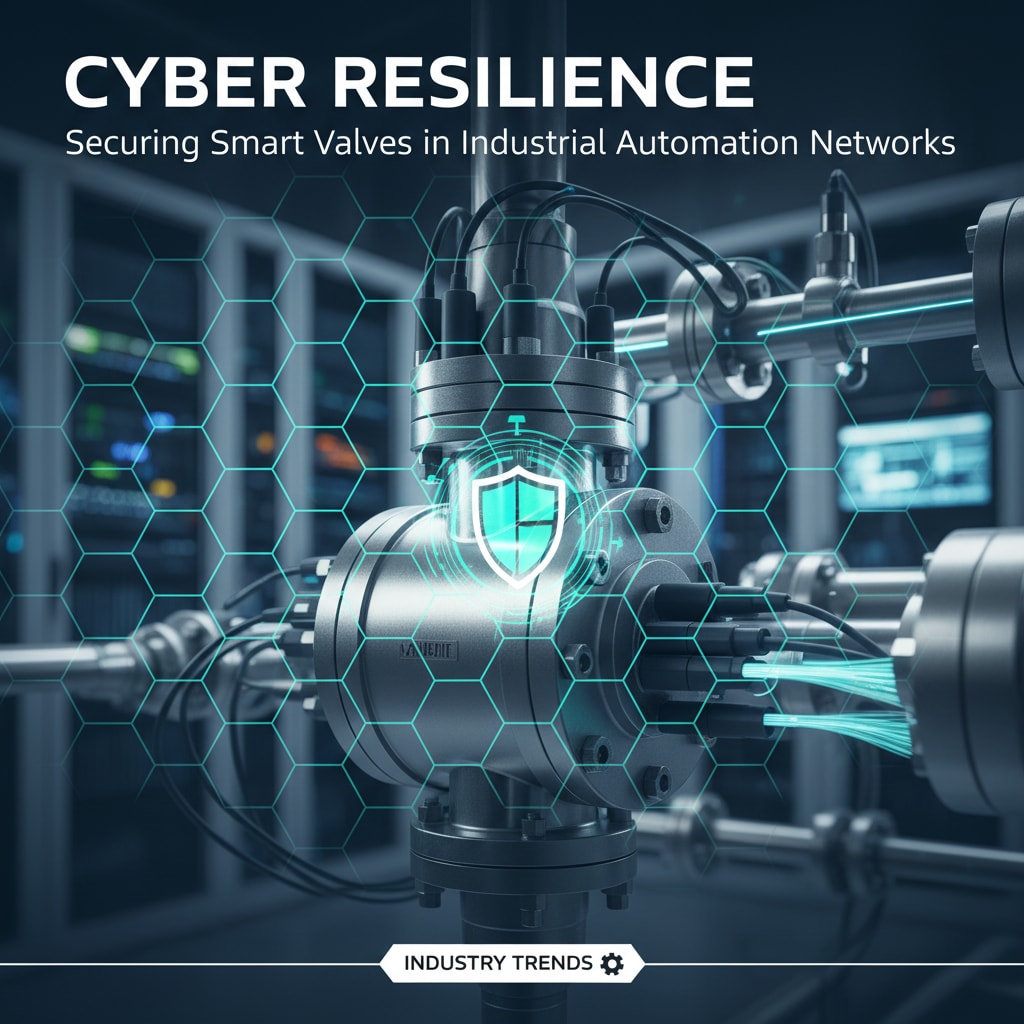
The industrial landscape is undergoing a rapid transformation driven by the Industrial Internet of Things (IIoT). Smart valves, equipped with advanced sensors, diagnostics, and network capabilities, are central to this evolution, offering unprecedented efficiency, predictive maintenance, and granular control over processes. However, this connectivity introduces a significant vulnerability: cyber risk. Unlike traditional, isolated control systems, connected smart valves are entry points into the Operational Technology (OT) network, making their cybersecurity paramount for maintaining safety, reliability, and integrity.
A successful cyber attack on a valve system could lead to catastrophic outcomes, including process shutdowns, environmental damage, or safety incidents. This article outlines the critical challenges and provides actionable strategies for building robust cyber resilience around smart valves and the underlying automation networks.
Understanding the Threat Landscape for OT Assets
The threat landscape targeting Operational Technology (OT) is distinct from traditional Information Technology (IT) threats. While IT focuses on data confidentiality, OT prioritizes system availability and integrity. Attacks often target the physical process itself.
Common Attack Vectors Targeting Smart Valves
- Network Exploitation: Exploiting vulnerabilities in communication protocols (like Modbus TCP, EtherNet/IP, or HART-IP) used by valve controllers and positioners.
- Firmware Tampering: Introducing malicious code or altering firmware settings to manipulate valve behavior, causing incorrect flow rates or pressure anomalies.
- Supply Chain Compromise: Attacks originating from compromised software or hardware components introduced during the manufacturing or integration phase.
- Credential Theft: Gaining unauthorized access to engineering workstations or Human-Machine Interfaces (HMIs) that configure or override valve settings.
The inherent long lifecycle of industrial equipment means that many smart valves and controllers deployed today may run legacy operating systems or firmware that cannot be easily patched, creating persistent security gaps.
Pillars of Defense: Strategies for Securing Smart Valves
Effective cybersecurity for smart valves requires a layered, defense-in-depth approach spanning network architecture, device hardening, and operational practices.
1. Network Segmentation and Zoning (The Purdue Model)
The foundational step in OT security is rigorous network segmentation. By adhering to principles like the Purdue Enterprise Reference Architecture, organizations can isolate critical control systems (Level 1 and 2) from enterprise networks (Level 3 and above).
- DMZ Implementation: Utilizing a secure demilitarized zone (DMZ) to manage data flow between the IT and OT environments, ensuring no direct communication path exists between the business network and the control devices.
- Micro-segmentation: Within the control network, segmenting individual process areas or even specific valve clusters using firewalls or VLANs. This limits the lateral movement of an attacker who successfully breaches one segment.
2. Device Hardening and Configuration Management
Smart valves are endpoint devices that must be secured individually. Device hardening minimizes the attack surface available to adversaries.
- Disable Unnecessary Services: Deactivate all unused ports, protocols, and diagnostic services on valve positioners and controllers.
- Strong Authentication: Implement robust password policies, multi-factor authentication (MFA) where supported, and ensure default credentials are changed immediately upon installation. Utilize role-based access control (RBAC) to restrict configuration changes only to authorized engineering personnel.
- Firmware Integrity Checks: Employ cryptographic checks (digital signatures) to verify the authenticity and integrity of firmware before and during execution.
3. Secure Communication Protocols and Encryption
Data transmitted between the valve, the controller, and the supervisory system must be protected from eavesdropping and tampering.
- Protocol Security: Transitioning from older, unauthenticated protocols to modern, secure industrial protocols that incorporate native encryption and authentication (e.g., using TLS/SSL where applicable).
- VPNs for Remote Access: Any remote access required for diagnostics or maintenance must be channeled through secure, audited Virtual Private Networks (VPNs) with stringent access controls.
Operational Practices and Incident Response
Technology alone cannot guarantee security; human processes and operational rigor are equally vital.
Patch Management and Vulnerability Assessment
Patching in OT environments is complex due to the requirement for 24/7 availability and the risk of instability. A structured approach is essential:
- Inventory Management: Maintain a detailed, up-to-date inventory of all smart valve models, firmware versions, and associated controllers.
- Risk-Based Patching: Prioritize patching based on the criticality of the asset and the severity of the vulnerability. All patches must be tested rigorously in a staging environment before deployment to production.
- Virtual Patching: Where immediate patching is impossible, utilize network intrusion prevention systems (IPS) or firewalls to implement compensating controls (virtual patches) that block exploitation attempts.
Continuous Monitoring and Anomaly Detection
Visibility into the OT network traffic is crucial for detecting early signs of compromise. Traditional IT security tools are often inadequate for OT protocols.
- Deep Packet Inspection (DPI): Use specialized OT security platforms to monitor industrial protocol traffic (e.g., looking for unauthorized commands or configuration changes sent to a smart valve).
- Behavioral Analytics: Establish a baseline of normal valve operation (e.g., typical actuation times, command sequences, and data rates). Any deviation from this baseline—such as an unexpected remote command or an unusually rapid change in valve position—should trigger an immediate alert.
Real-World Application: Protecting a Critical Pipeline System
Consider a major oil or gas pipeline relying on hundreds of smart block valves for flow control and safety shutdown. A successful cyber attack could cause a catastrophic rupture or environmental disaster.
To protect this system, the operator implements:
- Level 1 Segmentation: Each pumping station's control network is isolated from the corporate network via an industrial firewall and DMZ.
- Hardened Devices: All valve positioners use unique, complex passwords and have physical lockout mechanisms enabled to prevent local unauthorized access.
- Protocol Monitoring: A dedicated OT Security Monitoring system analyzes all Modbus TCP traffic. If an unauthorized IP address attempts to send a 'Force Coil' command to a critical shutdown valve, the system immediately blocks the command and alerts the security team.
- Change Management: All firmware updates or configuration changes to the smart valves must follow a strict, auditable change management process, requiring dual authorization and logging.
Conclusion: Embracing Cyber Resilience as Standard Practice
The benefits of smart valves—enhanced efficiency and predictive capabilities—far outweigh the risks, provided that cybersecurity is integrated from the design phase (Security by Design). Protecting these critical endpoints is not merely an IT function; it is a core operational requirement. By implementing robust network segmentation, hardening individual devices, adopting secure protocols, and establishing continuous monitoring, industrial operators can ensure the integrity and availability of their automation networks, transforming potential vulnerabilities into sources of resilient control.