Introduction: The Shift from Reactive to Predictive Valve Maintenance
Industrial valves are the control points of any process plant—the arteries and veins regulating flow, pressure, and temperature. Their failure can lead to catastrophic downtime, safety hazards, and significant financial losses. Historically, valve maintenance has been reactive (fixing failures) or preventative (scheduled overhauls). However, the rise of the Industrial Internet of Things (IIoT) and advanced sensor technology has ushered in the era of Predictive Maintenance (PdM), where we anticipate failure long before it occurs.
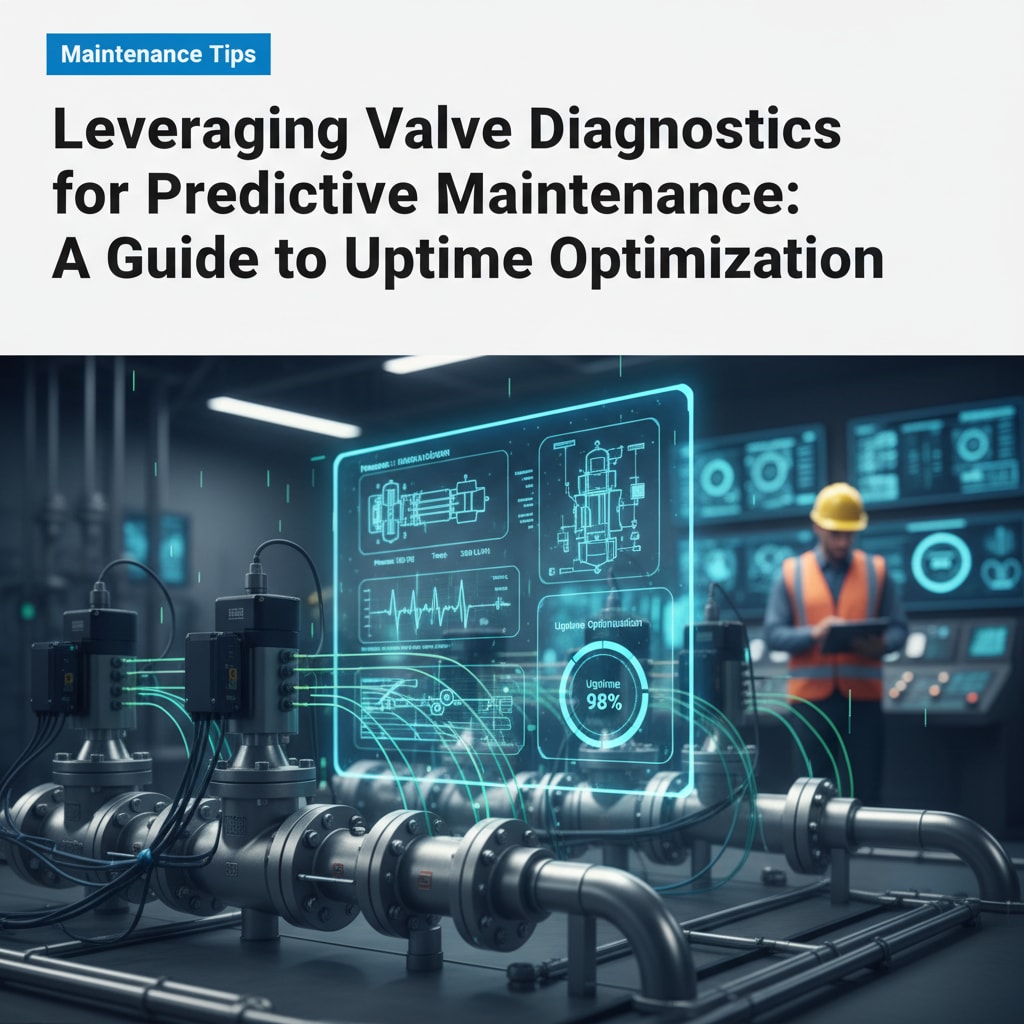
Predictive maintenance, enabled by sophisticated valve diagnostics, allows operators to understand the real-time condition of critical assets. By continuously monitoring key performance indicators (KPIs), plants can schedule maintenance only when necessary, optimizing resource allocation, extending asset life, and dramatically improving overall equipment effectiveness (OEE).
The Core Components of Industrial Valve Diagnostics
Effective valve diagnostics rely on a combination of robust sensing, precise data acquisition, and intelligent analysis. These components work together to create a comprehensive condition monitoring system.
1. Advanced Sensor Integration
Modern industrial valves are increasingly equipped with smart sensors that capture detailed operational data. Key measurements include:
- Position Transducers: Monitoring stem or shaft position for accurate travel and seating analysis. Essential for control valves and on/off valves to detect sticking or excessive friction.
- Pressure and Temperature Sensors: Monitoring upstream, downstream, and actuator pressure. Sudden pressure drops or spikes can indicate internal leakage or blockage.
- Vibration Sensors (Accelerometers): Crucial for rotary valves (like ball or butterfly valves) and actuators. Increased vibration often signals mechanical looseness, gear wear, or cavitation.
- Acoustic Emission Sensors: Detecting high-frequency sounds associated with internal leakage (through-seat leakage), cavitation, or flashing—issues often undetectable by standard pressure sensors.
- Actuator Current/Voltage Monitoring: Tracking the electrical load on electric actuators. Changes in current draw can reveal increased torque requirements due to wear or binding.
2. Data Acquisition and Edge Processing
The sheer volume of data generated by these sensors requires efficient handling. Edge computing—processing data locally near the valve—is vital for filtering out noise and performing initial analysis before transmitting only relevant alerts to the central control system (DCS or SCADA).
Key Diagnostic Techniques for Valve Condition Monitoring
Diagnostics are not just about collecting data; they are about interpreting specific patterns that correlate with known failure modes. Two primary techniques dominate:
1. Signature Analysis (Stroke Testing)
For control valves and automated on/off valves, signature analysis involves capturing a detailed plot of valve position versus actuator pressure (or force) during a full stroke (open-to-close or close-to-open). This produces a unique 'fingerprint' of the valve's mechanical health.
- Friction Analysis: High static or dynamic friction indicates packing degradation, stem binding, or actuator issues. The signature will show sharp pressure peaks required to initiate or maintain movement.
- Seat Leakage Testing: Analyzing pressure decay rates when the valve is closed and pressurized can quantify leakage rates, indicating wear on the seating surfaces.
- Actuator Spring Rate Check: Comparing the force required to compress the spring against the factory baseline helps identify a weakened or broken spring, crucial for fail-safe operations.
2. Continuous Online Monitoring
This involves constant data collection during normal operation to detect subtle, long-term degradation trends. Parameters monitored include cycle count, travel time deviations, and noise profiles.
- Drift Detection: A control valve that consistently requires more input signal to maintain a setpoint is exhibiting performance drift, often due to erosion or fouling.
- Cycle Time Deviation: If the time taken for an on/off valve to open or close increases gradually, it is a strong indicator of mechanical wear or actuator degradation.
Implementing Predictive Maintenance Strategies
Transitioning from diagnostics to true prediction requires robust data analytics and a structured approach to asset management.
1. Establishing Baselines and Thresholds
The first step in PdM is establishing a healthy baseline for every critical valve. This baseline, taken during commissioning or after a major overhaul, defines the normal operating signature. Predictive models then use statistical process control (SPC) to define alert thresholds (warning, alert, critical) based on deviations from this baseline. For example, if dynamic friction increases by 20% over the baseline, a warning is triggered.
2. Utilizing Machine Learning and AI
Advanced PdM systems employ machine learning (ML) algorithms to analyze complex, multi-variable data streams. ML models can identify subtle correlations between temperature, vibration, and control signal anomalies that human operators might miss. These models are trained on historical failure data to predict the remaining useful life (RUL) of the valve component, allowing maintenance to be scheduled precisely when needed, not just when a threshold is breached.
3. Integration with CMMS/EAM Systems
The diagnostic platform must seamlessly integrate with the plant's Computerized Maintenance Management System (CMMS) or Enterprise Asset Management (EAM) system. When a predictive alert is generated (e.g., “Ball valve V-301 predicted to fail due to excessive seat wear in 90 days”), a work order is automatically created in the CMMS, complete with diagnostic data and recommended actions. This closes the loop between data analysis and execution.
Real-World Applications and Benefits
The application of valve diagnostics spans every heavy industry, offering tangible returns on investment (ROI).
- Chemical Processing: Monitoring highly corrosive service valves using acoustic sensors to detect early signs of internal erosion, preventing unplanned shutdowns and ensuring safety compliance.
- Power Generation: Implementing stroke testing on turbine bypass valves to ensure rapid response times, critical for grid stability and protecting expensive turbine assets.
- Oil and Gas (Pipeline): Using continuous position monitoring and torque analysis on large pipeline block valves to verify operational readiness and prevent catastrophic leaks caused by failure to seal.
The benefits of a mature valve PdM program are substantial:
- Reduced Downtime: Eliminating unplanned failures by scheduling maintenance proactively.
- Optimized Inventory: Stocking spare parts only when the prediction indicates they will be needed, reducing carrying costs.
- Extended Asset Life: Addressing minor issues (like slight friction increase) before they cascade into major mechanical failures.
- Improved Safety: Ensuring critical safety valves (PSVs) and emergency shutdown (ESD) valves are always functioning within specification.
Conclusion: The Future of Valve Reliability
Industrial valve diagnostics is no longer an optional luxury—it is a foundational element of modern operational excellence. By adopting smart sensing technologies and leveraging the power of data analytics, plant operators can gain unprecedented visibility into the health of their control infrastructure. The shift to predictive maintenance transforms valves from potential points of failure into reliable, optimized assets, ensuring continuous, efficient, and safe plant operation in the competitive industrial landscape.