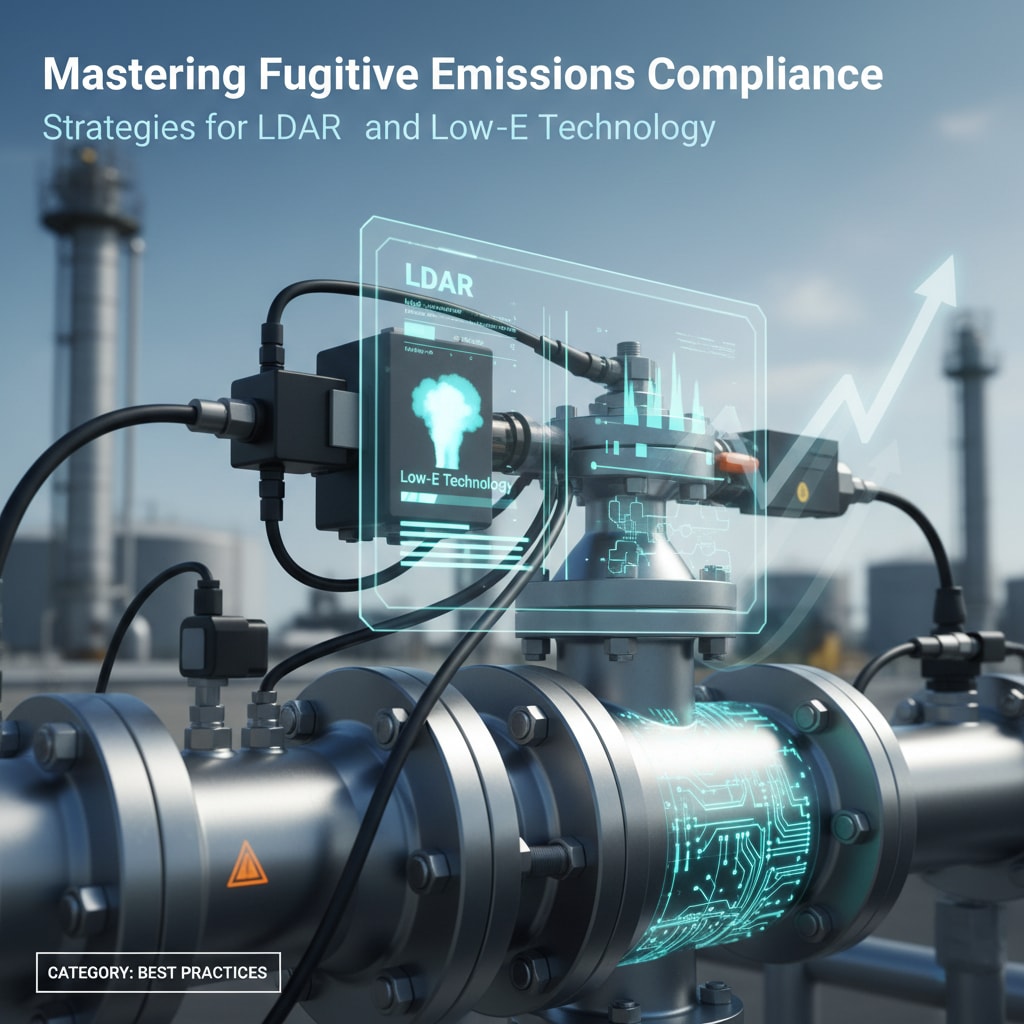
Mastering Fugitive Emissions Compliance: Strategies for LDAR and Low-E Technology
Fugitive emissions—unintentional leaks of gases or vapors from pressurized equipment like valves, pumps, flanges, and compressors—represent a major challenge for the process industries. These leaks contribute significantly to greenhouse gas emissions, pose safety hazards, and are subject to increasingly stringent global regulatory oversight. Achieving and maintaining compliance requires a multi-faceted approach, combining proactive monitoring programs with advanced component technology. This guide explores the essential strategies for mastering fugitive emissions compliance, focusing on Leak Detection and Repair (LDAR) programs and the implementation of Low-Emission (Low-E) components.
The Regulatory Landscape Driving Emissions Control
The push for stricter fugitive emissions control is driven by both environmental stewardship and binding regulatory frameworks. Understanding these standards is the first step toward effective compliance.
Key Regulatory Standards
In the United States, the Environmental Protection Agency (EPA) mandates specific requirements under various New Source Performance Standards (NSPS) and National Emission Standards for Hazardous Air Pollutants (NESHAP). These regulations often dictate the frequency of monitoring, the definition of a 'leak' (typically based on parts per million, ppm), and the required repair timelines. Internationally, organizations like the International Organization for Standardization (ISO) provide crucial guidance.
- EPA Method 21: The foundational standard for determining volatile organic compound (VOC) leaks using portable monitoring instruments.
- ISO 15848-1/2: This international standard specifically addresses the measurement, test procedures, and acceptance criteria for fugitive emissions from industrial valves and flanges. Compliance with ISO 15848 is often a prerequisite for specifying 'Low-E' equipment globally.
- Methane Regulations: Growing focus on methane (a potent greenhouse gas) has led to targeted regulations requiring enhanced monitoring and reporting in the oil and gas sector.
Implementing Effective Leak Detection and Repair (LDAR) Programs
LDAR programs are the cornerstone of fugitive emissions management. A well-executed LDAR program systematically identifies, quantifies, and repairs leaks, minimizing overall emissions and ensuring regulatory adherence.
Phase 1: Monitoring and Detection
Monitoring involves periodic surveys of all regulated components using specialized equipment. While traditional methods rely on portable analyzers (following EPA Method 21), newer technologies are enhancing efficiency and accuracy:
- Traditional Monitoring (Sniffing): Using a portable VOC analyzer (e.g., flame ionization detector or photoionization detector) to sample air around potential leak sources. This is labor-intensive but provides precise quantification.
- Optical Gas Imaging (OGI): Using infrared cameras to visualize gas leaks in real-time. OGI allows for rapid screening of large areas and identification of major leaks, significantly improving the efficiency of the LDAR team. OGI is often used to prioritize components for subsequent Method 21 quantification.
- Continuous Monitoring Systems (CMS): Deploying fixed sensors at strategic points within a facility to provide real-time data on leak events, enabling immediate response and reducing the time between leak occurrence and detection.
Phase 2: Repair and Documentation
Once a leak is detected and tagged, the repair process must commence within regulatory timelines (often 5 to 15 days, depending on the severity and regulation). Accurate documentation is critical for demonstrating compliance.
The LDAR database must track:
- Component identification (tag number, service)
- Date of leak detection and initial concentration (ppm)
- Date of repair attempt(s)
- Post-repair concentration confirmation
- Reason for delay if repair exceeds the mandated timeframe (e.g., requiring a unit shutdown).
Engineering Solutions: The Role of Low-E Components
While LDAR focuses on managing existing leaks, the most effective long-term strategy is prevention. This involves specifying and installing components designed to minimize emissions inherently—known as Low-E technology.
Low-E Valve Packing Design
Valves, particularly control and block valves, are the largest source of fugitive emissions in most plants. Low-E compliance is primarily achieved through advanced packing systems.
- High-Density Graphite: Modern Low-E packing typically utilizes flexible, high-density graphite rings. These rings offer superior sealing capabilities and thermal stability compared to traditional asbestos or PTFE packing.
- Live Loading Systems: To counteract the relaxation and wear of packing material over time, Low-E valves often incorporate 'live loading' systems (e.g., Belleville springs). These springs maintain a consistent, high compressive force on the packing set, ensuring a tight seal even as the packing material consolidates.
- Testing and Certification: A valve is certified as Low-E only after successfully passing rigorous testing under standards like ISO 15848-1 or API 622/624. These tests simulate operational conditions (pressure, temperature, cycling) and measure the leakage rate, typically requiring leakage below 50 ppm or 100 ppm, depending on the standard.
Flange and Connection Integrity
Beyond valves, flanges and pipe connections are significant leak sources. Utilizing specialized low-stress gaskets, implementing proper bolt tensioning procedures (using hydraulic tensioners or calibrated torque wrenches), and employing welded connections where feasible drastically reduces potential leak paths.
Integrating Data and Environmental Reporting
Effective compliance requires transforming raw monitoring data into actionable insights and accurate regulatory reports. Digitalization plays a vital role in this process.
Data Management and Digitalization
Modern LDAR programs rely on specialized software platforms that integrate data from field monitoring devices (handhelds, OGI cameras, CMS). These platforms automate compliance calculations, prioritize repair lists based on leak severity, and generate the necessary documentation trail for audits.
- Geospatial Tagging: Using GPS coordinates or QR codes to precisely locate components and link monitoring results directly to the asset management system.
- Predictive Maintenance: Analyzing historical LDAR data to identify components or service types that are prone to leaks, allowing facilities to proactively replace or upgrade equipment before regulatory limits are breached.
Accurate Environmental Reporting
Facilities must accurately quantify total fugitive emissions for annual reporting requirements (e.g., EPA's Greenhouse Gas Reporting Program or state-level inventories). The data collected through the LDAR program is used in conjunction with regulatory emission factors to calculate the mass of pollutants released.
Transparency and accuracy in reporting are non-negotiable. Auditable records demonstrating consistent monitoring, timely repairs, and the use of certified Low-E equipment are essential for mitigating regulatory risk.
Conclusion
Mastering fugitive emissions compliance is an ongoing commitment that demands technical rigor and strategic investment. By implementing robust LDAR programs utilizing advanced detection methods like OGI, prioritizing the installation of certified Low-E valves with live loading and high-performance packing, and leveraging digital tools for data management and reporting, industrial facilities can significantly reduce their environmental footprint, enhance operational safety, and ensure continuous adherence to increasingly demanding regulatory standards. The transition from reactive leak repair to proactive emissions prevention is not just a regulatory requirement—it is a critical element of modern industrial sustainability and efficiency.