
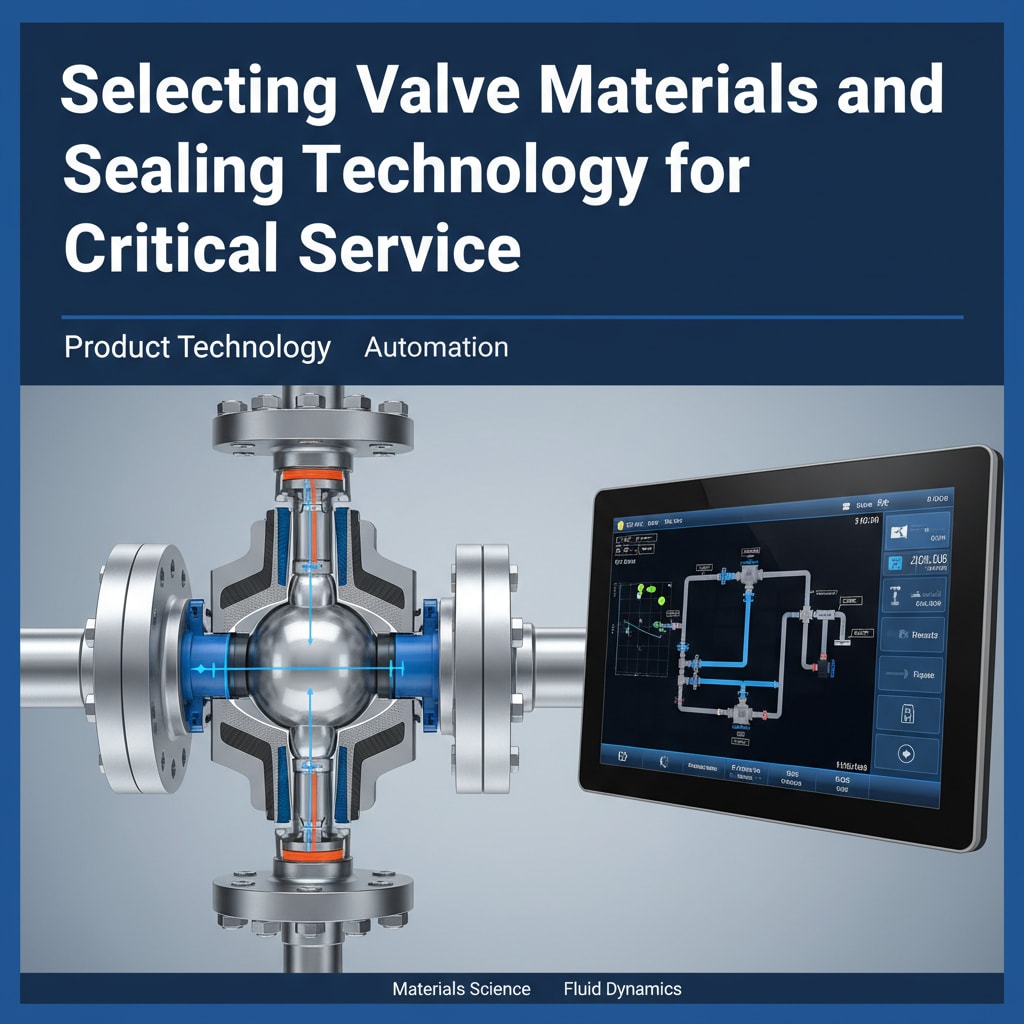
Introduction: The Criticality of Material Selection in Valve Design
In industrial process control, the valve is often the final control element, directly managing flow, pressure, and temperature. While the mechanical design dictates function (e.g., ball, globe, gate), the materials of construction dictate survivability and performance. Selecting the appropriate metallurgy for the body and trim, coupled with the correct sealing technology (packing and seats), is not merely an exercise in cost reduction—it is fundamental to safety, reliability, and regulatory compliance. A mismatch between the process fluid and the valve material can lead to catastrophic failure, erosion, corrosion, or contamination.
This guide delves into the technical considerations required for robust material and sealing selection across diverse industrial applications, focusing on compatibility with media, pressure, and temperature extremes.
1. Metallurgy: Body and Trim Material Selection
The primary function of the valve body and trim (ball, disc, stem) material is to withstand the mechanical stresses of operation and the chemical attack from the process fluid. Material choice is fundamentally driven by pressure-temperature (P/T) ratings and corrosion resistance.
A. Standard and Exotic Alloys
The vast majority of industrial valves utilize standard materials like Carbon Steel (WCB, LCB), Stainless Steel (304, 316), and Low-Temperature Carbon Steel (LCC). However, critical or severe service applications often necessitate exotic alloys:
- Duplex and Super Duplex Stainless Steels: Offer superior resistance to pitting and stress corrosion cracking (SCC), particularly in chloride-rich environments (e.g., offshore oil and gas, desalination).
- Nickel Alloys (e.g., Hastelloy, Monel, Inconel): Used where extreme temperature resistance, high strength, and resistance to highly aggressive chemicals (e.g., strong acids like hydrofluoric or sulfuric) are required.
- Titanium: Excellent corrosion resistance, especially against wet chlorine and seawater, but high cost and specific manufacturing requirements limit its use to highly specialized applications.
B. Understanding Corrosion Mechanisms
Engineers must evaluate the potential for several types of corrosion:
- General Corrosion: Uniform material loss across the surface. Measured by corrosion rate (mils per year, MPY).
- Pitting Corrosion: Localized attack, common in stagnant conditions or high chloride concentrations. Pitting Resistance Equivalent Number (PREN) is a key metric for stainless steels.
- Erosion-Corrosion: Material loss caused by the combined effect of chemical attack and mechanical wear from high-velocity fluids or slurries. Hard-facing materials (like Stellite) are often applied to trim components to mitigate this.
- Stress Corrosion Cracking (SCC): Cracking caused by tensile stress and a specific corrosive environment (e.g., chlorides in stainless steel).
2. Sealing Technology: Elastomers and Thermoplastics
Soft seats and seals, typically used in on/off valves (like ball and butterfly valves), provide bubble-tight shutoff. Their selection is critical as they are the most vulnerable components to chemical attack and thermal degradation.
A. Common Elastomers and Their Limitations
Elastomers offer flexibility and resilience but have defined temperature and chemical limits:
- Buna-N (Nitrile): Excellent resistance to petroleum-based oils and fuels; poor resistance to ozone, sunlight, and high temperatures (<250°F).
- Viton (FKM): Superior chemical resistance to a wide range of hydrocarbons and acids; good high-temperature performance (up to 400°F).
- EPDM (Ethylene Propylene Diene Monomer): Excellent resistance to steam, hot water, and polar solvents (ketones, alcohols); incompatible with petroleum products.
B. High-Performance Thermoplastics
For applications exceeding the thermal or chemical limits of standard elastomers, high-performance plastics are utilized:
- PTFE (Polytetrafluoroethylene): The gold standard for chemical inertness and low friction. Suitable for temperatures up to 450°F. However, it exhibits cold flow (creep) under high pressure, requiring specialized seat designs (e.g., filled PTFE).
- PEEK (Polyether Ether Ketone): Exceptional mechanical strength and thermal stability (up to 500°F+). Used extensively in high-pressure, high-temperature (HPHT) oil and gas applications where PTFE fails.
3. Stem Sealing: Packing Systems and Fugitive Emissions Control
The stem packing system is vital for preventing media leakage to the atmosphere (fugitive emissions). Regulations like the EPA’s Quad O (OOOOa) have driven significant advancements in packing technology.
A. Traditional vs. Low-Emission Packing
Traditional packing materials include braided asbestos (now obsolete), graphite, and PTFE rings. Modern systems focus on achieving low-emission standards:
- Graphite Foil Rings: Excellent thermal stability (up to 1200°F in non-oxidizing environments) and chemical resistance. Often used in high-temperature steam and hydrocarbon service. Requires careful installation and compression.
- PTFE V-Rings: Ideal for chemical service below 450°F. Their shape provides an automatic sealing action as pressure increases.
- Live-Loaded Packing Systems: Utilize springs (Belleville washers) or other mechanisms to maintain constant compressive force on the packing stack, compensating for thermal cycling, pressure fluctuations, and material relaxation. This is essential for meeting stringent low-emission requirements (<100 ppm).
B. Packing Configuration
The arrangement of the packing rings (e.g., sets of header and follower rings) and the use of lantern rings (for sealant injection or venting) significantly impact sealing performance and longevity. Proper gland follower torque is critical; overtightening causes excessive friction and stem wear, while undertightening leads to leaks.
4. Material Compatibility and Application Examples
The selection process must be systematic, ensuring all components—body, trim, seats, and packing—are compatible with the process conditions.
A. Example 1: High-Temperature Steam Service
Conditions: 600°F, 900 psi saturated steam.
- Body/Trim: Chrome-Moly Steel (e.g., WC6, C5) or 316 Stainless Steel for corrosion resistance and high-temperature strength. Trim often hard-faced (Stellite 6).
- Sealing: Flexible Graphite packing (due to temperature). Metal seats or hard seats (Stellite overlay) are mandatory as soft seats cannot withstand the heat.
B. Example 2: Highly Corrosive Acid Service (e.g., Chlor-Alkali)
Conditions: Hydrochloric Acid (HCl), ambient temperature.
- Body/Trim: Often requires exotic alloys like Hastelloy C-276 or lined valves (PTFE/PFA lining) to prevent metal contact with the acid.
- Sealing: PTFE seats and V-rings are typically used due to their near-universal chemical resistance at lower temperatures.
C. Example 3: Cryogenic Service (LNG)
Conditions: -260°F Liquefied Natural Gas.
- Body/Trim: Low-Temperature Carbon Steel (LCC) or Austenitic Stainless Steel (304/316) which retains ductility at extremely low temperatures.
- Sealing: PTFE or PCTFE seats (chosen for low-temperature flexibility). Extended bonnets are required to keep the packing area warmer, preventing ice formation and maintaining seal integrity.
Conclusion: A Holistic Approach to Valve Specification
Specifying industrial valves requires integrating metallurgical knowledge with sealing technology expertise. Engineers must move beyond simply selecting a P/T rating and fully characterize the process fluid, including concentration, temperature range, velocity, and the presence of solids or abrasive particles. Utilizing industry standards (like NACE MR0175 for sour service) and consulting detailed corrosion charts are non-negotiable steps. By adopting a holistic approach that balances material cost, operational life, and safety requirements, facilities can ensure the selection of valves that provide maximum reliability and minimize the risk of costly downtime or environmental incidents.